
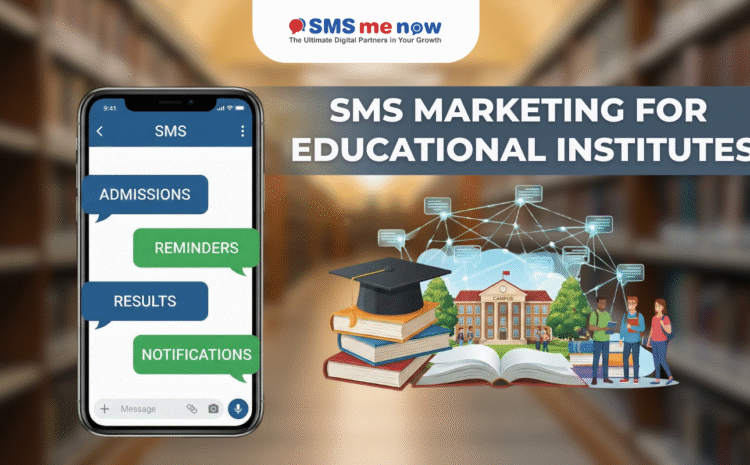
SMS Marketing for Educational Institutes: Admissions, Reminders, Results, and Notifications
In the rapidly evolving digital landscape of 2026, educational institutes—ranging from K-12 schools to global universities—are facing a common challenge: The Communication Gap. With email open rates hovering around 20% and social media algorithms burying critical updates, institutes need a direct, reliable, and “always-on” channel.
Enter SMS Marketing. Boasting a staggering 98% open rate and a 90-second average response time, SMS has become the backbone of modern campus communication. Whether it’s securing a high-value enrollment or sending an urgent weather alert, a text message ensures your voice is heard instantly.
In this guide, we’ll explore how educational leaders are leveraging SMS to streamline admissions, boost engagement, and ensure the safety of their students and staff.
Why SMS is a “Must-Have” for Education in 2026
The student and parent population of 2026 is mobile-first. They don’t just prefer text; they expect it for time-sensitive information.
- Instant Reach: 90% of text messages are read within 3 minutes of delivery.
- Accessibility: Unlike apps or portals, SMS doesn’t require a high-speed data plan or the latest smartphone. It works on every mobile device.
- High Engagement: SMS response rates are nearly 4.5x higher than email.
- Cost-Effective: Compared to traditional print media or expensive PPC (Pay-Per-Click) ads, bulk SMS offers an incredible ROI (Return on Investment) for admission drives.
Transforming the Admission Funnel with SMS
The admission season is often chaotic. SMS helps bring order to the process by providing “nudges” at every stage of the funnel.
A. Lead Generation & Recruitment
- Instant Acknowledgment: As soon as a prospective student fills out an inquiry form on your website, send an automated SMS: “Hi [Name], thank you for your interest in [Institute Name]! Our counselor will call you shortly. View our brochure here: [Link].”
- Event Invitations: Increase attendance at Open Houses, webinars, or campus tours by sending personalized invites and RSVP links.
B. Application Nudges
- Deadline Alerts: Many students start an application but lose momentum. A gentle text reminder 48 hours before the deadline can increase completion rates by 25%.
- Document Requests: If an application is missing a transcript or ID, a quick text with a link to the upload portal saves days of back-and-forth emails.
C. Status Updates
- Real-time Tracking: Notify students when their application moves from “Received” to “Under Review” or “Accepted.”
Beyond Admissions: Daily Operations & Alerts
Once the student is enrolled, SMS shifts from a marketing tool to a powerful administrative assistant.
- Fee Payment Reminders: Send automated alerts for upcoming tuition deadlines to reduce late payments and administrative overhead.
- Attendance Alerts: Instantly notify parents if a student is absent without prior notice. This builds trust and ensures student safety.
- Exam Schedules & Results: Release exam dates and instant result links directly to the student’s phone. This reduces server crashes on your main portal as students are directed to specific, cached result pages.
- Extracurricular Updates: Whether it’s a change in the basketball practice time or a reminder for the Annual Day rehearsal, SMS keeps everyone in the loop.
Safety First: Emergency & Weather Notifications
In times of crisis, speed is the only metric that matters.
- Weather Alerts: Instantly inform staff and parents about school closures due to extreme weather (heatwaves, heavy rain, or snow).
- Security Alerts: In the event of a campus emergency, mass SMS is the only way to reach 100% of your community simultaneously, bypassing Wi-Fi outages or app glitches.
Best Practices for Educational SMS Marketing
To maintain trust and avoid being marked as “spam,” follow these 2026 industry standards:
- Obtain Explicit Consent (Opt-in): Only text those who have permitted you. Include an SMS opt-in checkbox on all admission and orientation forms.
- Segment Your Audience: Don’t send a hostel update to students who live off-campus. Use your CRM to segment by Grade, Department, or Interest Group.
- Keep it Professional: Use a verified Sender ID (e.g., AD-SCHOOL), so recipients know the message is official.
- Timing is Everything: Avoid sending non-urgent messages during late nights or early mornings. For students, late mornings are the “sweet spot” for engagement.
- Always Include an Opt-out: Every message should have a clear path for the user to unsubscribe (e.g., “Reply STOP to opt-out”).
Frequently Asked Questions (FAQ)
Q1: Is SMS marketing for schools legal in India?
A: Yes, but you must be registered on a DLT (Distributed Ledger Technology) portal and only send messages to those who have opted in. Transactional messages (like OTPs or attendance) are governed by different rules than Promotional messages.
Q2: How much does it cost to send bulk SMS to all parents?
A: Bulk SMS is highly cost-effective, typically ranging from ₹0.12 to ₹0.25 per message, depending on the volume.
Q3: Can we send results via SMS?
A: Yes! You can either send the marks directly in the text or, more commonly, a secure link that leads the student to their personal result dashboard.
Q4: Can parents reply to our SMS?
A: Yes, if you use a Two-way SMS service. This is great for confirming absences or RSVPing for parent-teacher meetings.
Q5: What is the character limit for a school SMS?
A: A standard SMS is 160 characters. If you use non-English characters (Unicode), the limit per credit is 70 characters.
Q6: What is a “Sender ID” or “Header”?
A: It is the 6-character name (e.g., HP-MYUNIV) that appears at the top of the message. It builds brand recognition and trust.
Q7: Can we automate birthday wishes for students?
A: Absolutely. Most SMS platforms can pull date-of-birth data from your CRM to send automated, personalized birthday greetings.
Q8: How do I handle parents who have activated DND (Do Not Disturb)?
A: Critical alerts (Admissions, Fee reminders, Results) can be sent via the Transactional or Service Implicit route, which bypasses DND restrictions as per TRAI guidelines.
Disclaimer
Educational institutes are responsible for maintaining data privacy as per the Digital Personal Data Protection (DPDP) Act of India. SMS marketing should be used ethically, and student data must be secured within encrypted systems.
Conclusion
In 2026, the success of an educational institute is defined by how well it communicates. SMS marketing isn’t just about “sending texts”; it’s about building a responsive, transparent, and secure ecosystem for your students and their families. By bridging the gap between the institute and the home, you don’t just improve operations—you build a lasting legacy of trust.