
SEO in the Age of AI Search: How Businesses Can Appear in Google AI Overviews & AI Mode in 2026
Quick Answer
Google’s 2026 guidance says established SEO best practices remain relevant to AI Overviews and AI Mode because generative features are rooted in core Search systems. Businesses should focus on crawlable technical foundations, unique expert-led content, clear organisation, useful local or product data and measurement in Search Console rather than chasing unsupported “AEO/GEO hacks.”
SEO in the Age of AI Search: How Businesses Can Appear in Google AI Overviews & AI Mode in 2026 is an important business topic because communication and marketing systems now sit directly inside the customer journey. Businesses are no longer choosing tools only for sending messages or receiving calls; they are deciding how leads are captured, how quickly teams respond, how customer consent is respected and how outcomes are measured.
This guide focuses on AI SEO 2026 from a practical 2026 perspective. It explains where the approach creates value, where businesses commonly make mistakes, how to implement it in stages and what to measure after launch. The goal is not to overload the discussion with code or platform jargon, but to give owners and marketing or operations teams a clear framework they can use when planning the service.
Why This Topic Matters for Businesses in 2026
- Google explicitly states that SEO remains relevant for generative AI search and that its AI features use Search ranking and quality systems.
- Google recommends valuable, non-commodity content with unique perspective rather than simply recycling common information.
- There is no special Google requirement for llms.txt, special AI markup or artificially “chunked” content to appear in generative results.
- Technical eligibility still matters because a page must be indexable and eligible for Search snippets before it can participate in these experiences.
- Local businesses can strengthen visibility through accurate Google Business Profile and business information in addition to website content.
Principles for a Practical Digital Growth Strategy
- Marketing should start with a clear business objective and a measurable customer action. Reach and traffic are useful only when they contribute to awareness, enquiry, sale or retention.
- Channel strategy should reflect customer intent. Search, social, messaging, email and calls play different roles and should not be judged with one universal KPI.
- Landing pages and follow-up processes are part of campaign performance. Advertising cannot compensate indefinitely for unclear offers, slow response or poor sales ownership.
- Measurement should connect platform data with CRM or sales outcomes so the team knows which activities create qualified demand and revenue.
A Practical Workflow
- Audit crawlability, indexation, duplicate content and mobile experience.
- Identify real customer questions and decision journeys, not only high-volume keywords.
- Create original pages with expert or first-hand insight that competitors cannot easily copy.
- Structure content with clear headings, direct answers and natural internal links.
- Keep local business, products and services accurate across relevant Google surfaces.
- Use Search Console and conversion data to measure visibility and qualified outcomes.
Business Use Cases
- A local clinic can publish a genuinely useful service guide and maintain accurate Business Profile information instead of creating fifty thin “near me” pages.
- A manufacturer can add original technical selection guidance from its engineers rather than generic AI-written definitions.
- A service company can connect a detailed comparison blog to the relevant service page and enquiry flow.
What to Measure
- Track Search impressions. Define exactly how the metric is calculated and who reviews it so reporting remains consistent across campaigns and teams.
- Track generative AI visibility in Search Console where available. Define exactly how the metric is calculated and who reviews it so reporting remains consistent across campaigns and teams.
- Track qualified organic sessions. Define exactly how the metric is calculated and who reviews it so reporting remains consistent across campaigns and teams.
- Track service-page engagement. Define exactly how the metric is calculated and who reviews it so reporting remains consistent across campaigns and teams.
- Track organic leads. Define exactly how the metric is calculated and who reviews it so reporting remains consistent across campaigns and teams.
- Track conversion rate. Define exactly how the metric is calculated and who reviews it so reporting remains consistent across campaigns and teams.
Common Mistakes to Avoid
- Avoid creating thin pages for every query variation. This usually creates either unnecessary cost, weak customer experience, poor reporting or compliance risk.
- Avoid chasing llms.txt as a Google ranking trick. This usually creates either unnecessary cost, weak customer experience, poor reporting or compliance risk.
- Avoid purchasing fake mentions. This usually creates either unnecessary cost, weak customer experience, poor reporting or compliance risk.
- Avoid overusing schema without matching visible content. This usually creates either unnecessary cost, weak customer experience, poor reporting or compliance risk.
- Avoid publishing AI drafts without original value or review. This usually creates either unnecessary cost, weak customer experience, poor reporting or compliance risk.
Implementation Checklist
- Start with the customer journey and current baseline: traffic source, enquiry volume, response time, conversion rate and average customer value.
- Fix measurement before increasing budget. Every major form, call, WhatsApp enquiry or sale should have enough source information to support decisions.
- Run focused experiments with one hypothesis at a time—new audience, creative, landing page or offer—so the result is interpretable.
- Combine short-term paid acquisition with owned assets such as useful website content, CRM data and permissioned customer audiences.
- Review performance on a business cadence and move budget based on qualified outcomes rather than vanity metrics.
A 30-Day Action Plan
- Week 1 – Baseline: document current traffic, lead sources, conversion rate, customer value and response time. Confirm analytics, call, form and WhatsApp tracking before using new campaign data to make budget decisions.
- Week 2 – Build: improve the most important landing or service pages, align the offer with customer intent and prepare a focused content or campaign test with one clear hypothesis and conversion action.
- Week 3 – Launch: run the test with enough budget or publishing support to collect meaningful data. Watch lead quality and sales feedback, not only platform clicks, impressions or ranking movement.
- Week 4 – Learn: compare qualified leads, conversions and acquisition cost with the baseline. Keep what worked, document what failed and select the next experiment without changing several variables at the same time.
- Treat the first 30 days as a measurement and learning cycle rather than a promise of instant growth. Sustainable digital performance comes from repeatedly improving offer, website, traffic quality and follow-up together.
Frequently Asked Questions (FAQs)
1. Is SEO still relevant for AI Overviews?
Yes. Google says foundational SEO best practices remain relevant because generative Search features rely on its core ranking and quality systems.
2. Do I need GEO instead of SEO?
Google treats optimisation for its generative search experience as part of SEO. GEO may be industry terminology, but it should not replace fundamentals.
3. Does Google require llms.txt?
No. Google’s current guidance says llms.txt or special AI text files are not needed for Google Search visibility.
4. Should content be broken into tiny chunks for AI?
No. Google says there is no requirement to chunk content; organise it for readers and the subject.
5. What content is strongest in AI search?
Google emphasises unique, valuable and non-commodity content that brings real experience or perspective.
6. Does schema guarantee AI inclusion?
No. Structured data can support normal SEO and rich-result eligibility but does not guarantee generative visibility.
7. Do local businesses need Google Business Profile?
Google says Business Profiles can help local businesses and services appear in both AI responses and other Search results.
8. Can AI write SEO content?
AI can assist, but scaled low-value generation can violate spam policies. Human expertise, review and originality remain important.
9. How do we measure AI visibility?
Use Google Search Console’s available reporting plus business metrics such as qualified traffic and leads.
10. Can anyone guarantee AI citations?
No credible provider can guarantee how Google’s generative systems will cite or display a page.
Conclusion
AI SEO 2026 can create meaningful business value when it is designed around a real customer journey, clear ownership and measurable outcomes. The strongest implementations start with a focused problem, use the right channel for the right task and improve through actual performance data rather than adding automation for its own sake. For a practical discussion about your use case, visit SMSNow.in or use the SMS Me Now contact page to share your requirement. The team provides bulk SMS, voice, WhatsApp Business API, web and digital-marketing services that can be combined according to the business need.
| Plan your business communication or marketing workflow with SMS Me Now. Visit SMSNow.in or contact the team to discuss the most suitable setup for your business. |
Suggested Internal Links
- Local SEO + Google Business Profile + WhatsApp: How Local Businesses Can Turn “Near Me” Searches Into Enquiries
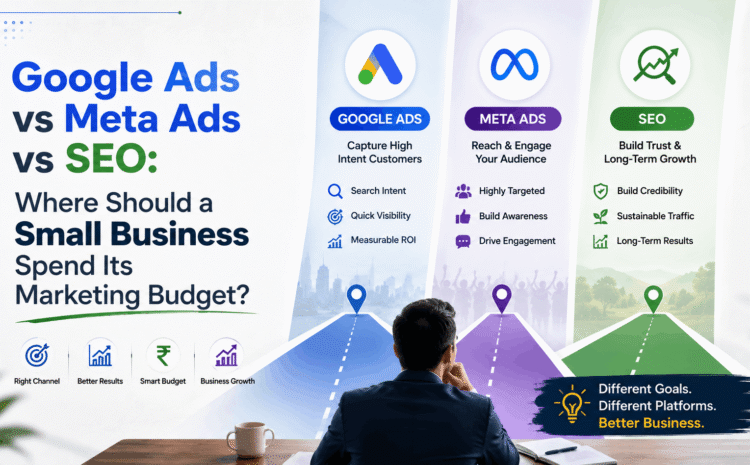
- Google Ads vs Meta Ads vs SEO: Where Should a Small Business Spend Its Marketing Budget?
- The First-Party Data Marketing Playbook: Connect Your Website, CRM, WhatsApp, SMS and Ads Instead of Losing Leads
Editorial References
Official/current references reviewed for facts that can change over time. Re-check platform rate cards and regulatory guidance before publication if scheduling far in advance.
- Google Search Central – Optimizing for Generative AI Features: https://developers.google.com/search/docs/fundamentals/ai-optimization-guide
- Google Search Central – AI Features and Your Website: https://developers.google.com/search/docs/appearance/ai-features
- SMS Me Now – Contact: https://smsnow.in/contact/
Disclaimer
This article is for general informational and marketing-planning purposes. Platform features, pricing, regulatory requirements, availability and technical capabilities can change. Verify current official documentation and obtain appropriate professional advice for compliance, privacy, security or regulated-sector requirements before implementation.