
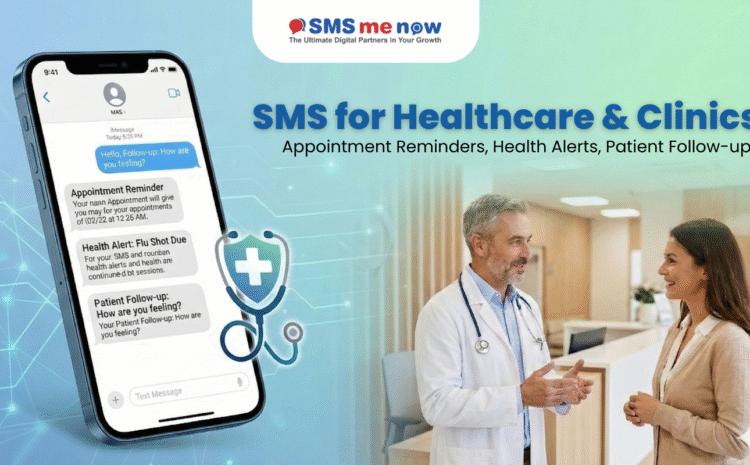
SMS for Healthcare & Clinics: Building Trust through Seamless Communication
In the fast-paced world of 2026, the primary goal of any healthcare facility—whether a multi-specialty hospital or a local neighborhood clinic—is to provide timely, high-quality care. However, administrative hurdles like missed appointments, patient no-shows, and manual follow-up calls often drain resources and impact patient outcomes.
SMS for Healthcare & Clinics has emerged as the most efficient, “mobile-first” solution to bridge this gap. With a near-perfect 98% open rate and most messages being read within 90 seconds, SMS ensures that critical health information lands exactly where it belongs: in the patient’s hand.
The Strategic Role of SMS in Modern Healthcare
By 2026, healthcare communication has moved past the “call-and-wait” era. Patients now expect an “Amazon-like” convenience in their healthcare journey.
- Instant Accessibility: SMS works on every mobile device without requiring internet or a specific app, making it the most inclusive communication channel for patients across all age groups and locations.
- Operational Efficiency: Automated SMS workflows can save clinic staff up to 4 hours a day by replacing manual reminder calls.
- Cost-Effectiveness: Compared to the high cost of a missed appointment—which averages thousands of rupees in lost revenue—a single SMS costing a few paise is a high-return investment.
Core Use Cases: From Booking to Recovery
To maximize the impact of SMS, clinics must integrate it into every stage of the patient lifecycle.
A. Smart Appointment Reminders
Missed appointments (no-shows) are more than just a financial loss; they delay care.
- The 24-Hour Nudge: Send a reminder 24 hours before the visit with clear action items.
- Two-Way Confirmation: “Hi Rahul, your appointment with Dr. Mehta is tomorrow at 10 AM. Reply ‘YES’ to confirm or ‘RE’ to reschedule.” This allows you to fill canceled slots instantly from your waitlist.
B. Pre-Visit Preparation & Intake
- Lab Instructions: “Reminder: Please remain fasting for at least 8 hours before your blood test tomorrow at 8 AM.”
- Digital Intake Forms: Send a link to pre-visit forms to reduce waiting room congestion. “Save time! Fill out your history form here before you arrive: [Link].”
C. Automated Health Alerts & Preventive Care
Proactive care is the hallmark of a great clinic.
- Vaccination Drives: “Flu season is here! Protect your family. Walk-in flu shots available at City Clinic this week.”
- Screening Reminders: Send alerts for annual check-ups, Pap smears, or dental cleanings based on patient age and history.
- Post-Appointment Follow-ups & Aftercare
- Medication Adherence: “Time for your evening dose of Medicine A. Did you take it? Reply Y/N.”
- Recovery Checks: “How are you feeling 24 hours after your procedure? If you have a fever or severe pain, please call us at [Number].”
Security, Privacy, and DPDP Compliance in 2026
In India, the Digital Personal Data Protection (DPDP) Act and TRAI (TCCCPR) regulations have strictly defined how patient data must be handled.
- Explicit Consent: You must have a record of the patient “opting in” to receive SMS. This is usually done via a checkbox on the physical or digital registration form.
- Data Minimization: Never send Protected Health Information (PHI) like specific diagnoses or lab results directly in an SMS. Instead, send a secure link to an encrypted patient portal.
- DLT Registration: Every clinic must be a registered Principal Entity (PE) on the DLT portal. Messages must use approved templates to avoid being blocked by telecom operators.
The Impact: SMS by the Numbers (2025–26 Data)
| Metric | Impact of SMS Integration |
| No-Show Reduction | Up to 38% decrease in missed appointments. |
| Staff Time Saved | Average of 4.5 hours daily on routine calls. |
| Medication Adherence | 45% improvement in patient compliance. |
| Patient Satisfaction | 83% of patients prefer text over calls for reminders. |
Frequently Asked Questions (FAQ)
Q1: Can I send actual lab results via SMS?
A: It is highly discouraged to send sensitive results in plain text. The best practice is to send an SMS notification: “Your results are ready. View them securely here: [Portal Link].”
Q2: Does SMS help with chronic disease management?
A: Yes. Regular “nudges” for blood pressure checks or glucose monitoring help patients stay on track, reducing hospital readmissions by nearly 25%.
Q3: How many reminders should I send for one appointment?
A: The “Golden Cadence” is: One confirmation at the time of booking, one reminder 24 hours before, and a final “Out for Clinic” nudge 2 hours before.
Q4: What if a patient doesn’t have a smartphone?
A: This is the beauty of SMS. It works on every basic “feature phone,” ensuring that even elderly or rural patients are never out of the loop.
Q5: Can patients reply to our SMS?
A: Yes, if you use a Two-Way SMS service. This is essential for allowing patients to confirm or cancel appointments without calling the front desk.
Q6: Are health alerts considered “Promotional” or “Transactional”?
A: Most healthcare alerts (OTPs, reminders, follow-ups) fall under “Service Implicit” or “Transactional” routes, meaning they can be delivered to DND-registered numbers.
Q7: How do I handle DLT registration for my small clinic?
A: Our team at DialMeNow handles the entire DLT onboarding process for you, from Header (Sender ID) registration to template approvals.
Q8: Can SMS be used for billing and payments?
A: Absolutely. You can send an SMS with a secure UPI or payment link immediately after a consultation to improve collection rates.
Disclaimer
Healthcare providers are responsible for ensuring all SMS communications comply with the DPDP Act 2023 and TRAI regulations. Sensitive patient data should always be routed through authenticated, encrypted portals. SMS delivery is subject to network availability and carrier filters.
Conclusion
In 2026, the quality of a clinic is measured not just by its doctors, but by its responsiveness. By integrating SMS for appointment reminders, health alerts, and follow-ups, you create a patient experience that is transparent, safe, and deeply respectful of the patient’s time. In the world of medicine, every second counts—and SMS ensures those seconds are never wasted.